Ask anyone who has tried to buy a plot in Assagao or Siolim in the last few years and they’ll tell you the same thing: the price quoted last season is rarely the price you hear today. The impact of tourism on Goa real estate is hard to miss. It shows up in the cafes that now sit where paddy fields used to be, in the villa projects along village roads, and in the number of Mumbai and Delhi registration plates parked outside rental homes in December.
This guide explains how visitors, and the people who fall in love with the state after visiting, shape property demand, pricing and returns. It also covers what to check before you put money in.
The Short Answer
Tourism is the single biggest driver of Goa’s property market. Constant visitor flow creates Goa property demand due to tourism, limited coastal land pushes prices up, and strong peak-season bookings make rental investment attractive in the right micro-markets. The same dependence on tourism also brings seasonality, regulatory and overbuilding risks that buyers should weigh carefully.
Why Goa Doesn’t Behave Like Other Property Markets
In most Indian cities, housing follows jobs. When an IT park opens, nearby apartments sell. Goa works differently. Its economy leans heavily on hospitality, so the property market follows footfall rather than payrolls.
That has a few consequences. Demand is concentrated in specific belts, mostly within a short drive of the coast. It also swings with the calendar, since October to March is busy and the monsoon is quiet. And the buyers are an unusual mix: locals, out-of-state professionals, NRIs, retirees and remote workers who simply wanted a better place to log in from.
This is why a general statement like “Goa property is rising” tells you very little. A beachside village in the north and an inland village in the south can move in completely different directions in the same year.
Goa Property Demand Due to Tourism
Visitors affect the market in ways that go beyond hotel bookings. Three patterns stand out.
Visitors who turn into buyers.
Plenty of people buy after the fifth or sixth holiday. They already know the roads, the beaches and the places to eat, so the leap from renting a villa for a week to owning one feels small. This lifestyle migration has grown steadily, especially since remote work became normal for many professionals.
Developers following the crowd.
Builders watch where tourists go. When a stretch of road fills up with restaurants, boutique stays and co-working spaces, residential and villa projects tend to follow within a few years. Demand in one village quietly spills into the next.
Infrastructure that widens the market.
The opening of Manohar International Airport at Mopa in early 2023 pulled attention toward Pernem and the northern edge of the state. Better highways and an additional airport make Goa easier to reach, and easier to reach means more people considering a purchase.
Put together, Goa property demand due to tourism is less a single wave than a layered effect: short-stay guests, repeat visitors, second-home buyers and investors all feed into it at once.
Tourism Driving Land Prices in Goa
Land is where the effect is sharpest. Supply is limited by coastal regulation zones, agricultural and no-development areas, eco-sensitive land and conversion rules. Demand keeps pressing against that fixed supply, and prices respond.
Here is what tends to push values up:
- Distance to the beach or a popular hub. A five-minute walk to a known cafe street can matter more than another bedroom.
- Commercial activity nearby. Restaurants, boutique hotels and wellness retreats raise perceived value for the plots around them.
- Road and airport access. Villages that become easier to reach often see interest rise before prices do.
- Scarcity of clean-title, conversion-ready land. Plots with clear documents are far fewer than listings suggest, so they command a premium.
This is the core reason for tourism driving land prices in Goa: tourism creates the demand, and regulation keeps the supply tight. The result is price growth that is uneven but often steep in the most visited pockets.
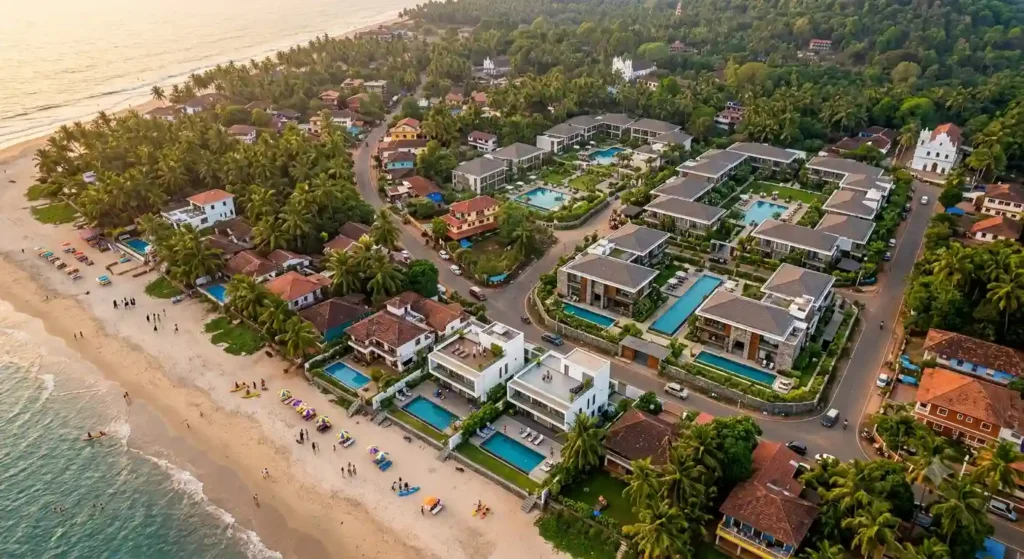
It also helps to compare areas side by side rather than trusting one “Goa average.”
| Micro-market | Tourism profile | Typical buyer | Common property type | Things to keep in mind |
|---|---|---|---|---|
| Assagao, Anjuna, Siolim (North) | Cafe culture, long-stay and boutique travel | Second-home buyers, NRIs, creative professionals | Villas, plots, boutique projects | Premium pricing; check land use and zoning closely |
| Candolim, Calangute, Baga | High footfall, packaged and domestic tourism | Investors seeking rentals | Apartments, serviced units | Busy and congested; strong occupancy but crowded supply |
| Pernem and Mopa belt | Emerging, airport-led interest | Early-stage investors, plot buyers | Plots, villas, apartments | Growth story still unfolding; verify infrastructure plans |
| Palolem, Benaulim, Agonda (South) | Quieter, wellness and slow travel | Lifestyle buyers, retirees | Villas, cottages, small projects | Slower resale; strong appeal for personal use |
| Panjim, Porvorim | Urban access with some tourism spillover | Working professionals, families | Apartments | Steadier everyday demand; less dependent on tourist season |
Treat the table as a starting point for research, not a price guide. Actual rates change by plot, road frontage and legal status.
Goa Real Estate Investment for Rental Income
The pitch is simple: buy a place, rent it to tourists, and let the sea air do the marketing. The reality is a little more nuanced, but Goa real estate investment for rental income can work when approached with realistic expectations.
Peak season carries the year.
Most bookings cluster between October and March, with spikes around Christmas and New Year. Many owners earn a large share of their annual income in those months. If you’re building a financial plan, model the monsoon as a slow period instead of assuming steady occupancy.
Location beats luxury.
Guests choose homes they can walk from to a beach, a market or good food. A modest apartment in a walkable spot often outperforms a larger villa that needs a car for everything.
Short-term and long-term rentals both exist.
Short stays through booking platforms earn more per night but need more management. Monthly or seasonal rentals to remote workers and long-stay visitors are steadier, with lower turnover and wear. Some owners mix the two, renting short-term in peak months and switching to longer stays during the rest of the year.
Costs matter more than headline yields.
Gross yield figures you see in marketing are before maintenance, property management fees, platform commissions, utilities, taxes and vacancy. Ask for an actual income and expense history from owners in the same complex rather than relying on projections.
Registration is part of the deal.
Tourist accommodation in Goa is expected to follow local registration rules, and homestay and guest house norms differ. Confirm what applies to your property type with the Goa Tourism Department or a local advisor before listing. Housing societies can also have their own rules on short-term letting.
A realistic way to think about it: rental income can help carry the costs of ownership and sometimes more, but it’s rarely the effortless income stream the brochures imply.
Goa Holiday Homes and the Second Home Market
The Goa holiday homes and second home market is where tourism’s influence feels most personal. Buyers aren’t only calculating returns; they’re buying a place to spend December, host family and eventually, perhaps, retire.
Three formats dominate:
- Apartments in resort-style complexes. These come with pools, security and shared maintenance, which suits owners who live elsewhere most of the year.
- Independent villas. They offer privacy and often a private pool, but require more upkeep and a reliable caretaker.
- Plots for custom builds. These appeal to buyers who want control over design, though they involve more paperwork and a longer timeline.
Many second-home owners follow a hybrid model: use the home a few weeks a year and rent it out the rest of the time. That keeps the property occupied, which is better for the building, and offsets running costs. It does mean trading some flexibility, since peak-season weeks are also the ones you’d most like to use yourself.
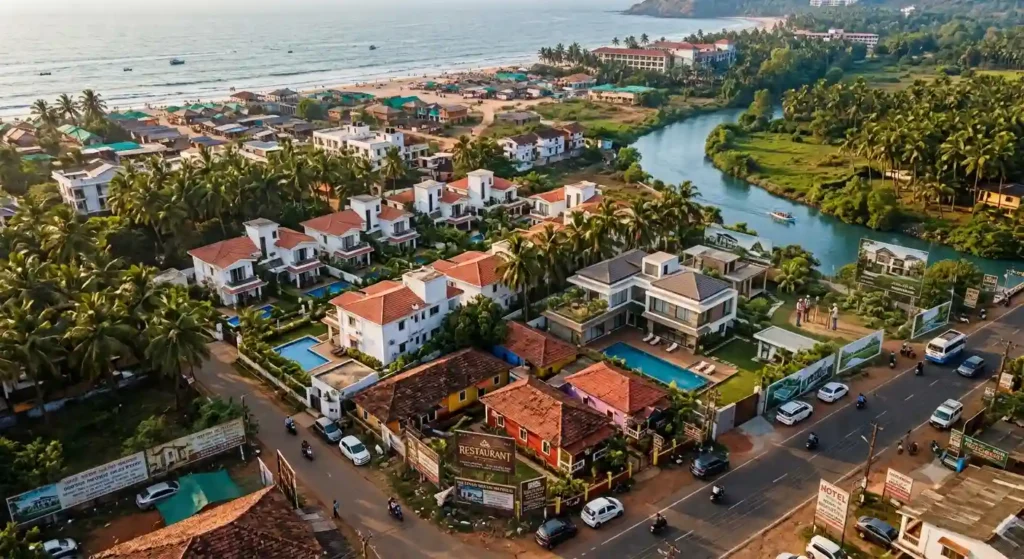
One more factor is worth knowing. Under foreign exchange rules, NRIs and OCI cardholders generally cannot buy agricultural land, plantation property or farmhouses in India. Always confirm the land category before you commit, especially if you’re buying from abroad.
The Risks Nobody Puts in the Brochure
Honest advice means talking about the downside too. The same tourism that lifts values can create problems.
Infrastructure strain. Popular villages deal with water shortages, traffic jams and waste management pressure. If a place becomes too crowded, the charm that attracted buyers in the first place can fade.
Legal complexity. Goa has specific rules on land conversion, coastal zones, tenancy and inheritance. Title disputes are not rare. A thorough legal check by a local lawyer is not optional.
Overheated micro-markets. When prices rise faster than rents, returns shrink. Some prime pockets may already be priced for perfection.
Dependence on tourist flow. Anything that dents travel, from economic slowdowns to weather events, affects occupancy. Properties that appeal to both tourists and residents are more resilient.
Regulatory change. Rules on short-term rentals, construction and land use can tighten. Build some margin into your plan.
A Practical Checklist Before You Buy
- Verify the title, survey records, zoning and conversion status through a local lawyer.
- Compare at least three micro-markets instead of relying on “Goa” as a whole.
- Visit in peak season and in the monsoon to see both versions of the place.
- Ask existing owners for real occupancy and expense numbers.
- Check housing society rules on rentals, and confirm registration needs.
- Budget for maintenance, especially for villas exposed to humidity and monsoon rain.
- Decide your priority up front: personal use, income or long-term appreciation. It’s hard to maximise all three.
Conclusion
The impact of tourism on Goa real estate is real, lasting and uneven. It creates demand, lifts land values, supports rental opportunities and powers the holiday home segment. But it also rewards buyers who do their homework and punishes those who chase hype.
If you’re serious about a purchase, spend time in the area, talk to people who already own there, and let legal due diligence lead the process rather than excitement. Goa will still be there next season, and so will the next good opportunity.
Frequently Asked Questions
Tourism raises demand for homes and land near beaches and popular hubs, while regulations keep buildable land limited. This combination pushes prices up, most visibly in North Goa villages.
It can be, especially in walkable, high-footfall areas. Income is seasonal, and net returns depend on management costs, occupancy and compliance with local rules.
Assagao, Siolim, Anjuna and Candolim are popular in the north, while Palolem, Benaulim and Agonda attract buyers looking for a quieter setting in the south.
NRIs can generally buy residential and commercial property but not agricultural land, plantations or farmhouses. Confirm the land category and get legal advice before buying.