
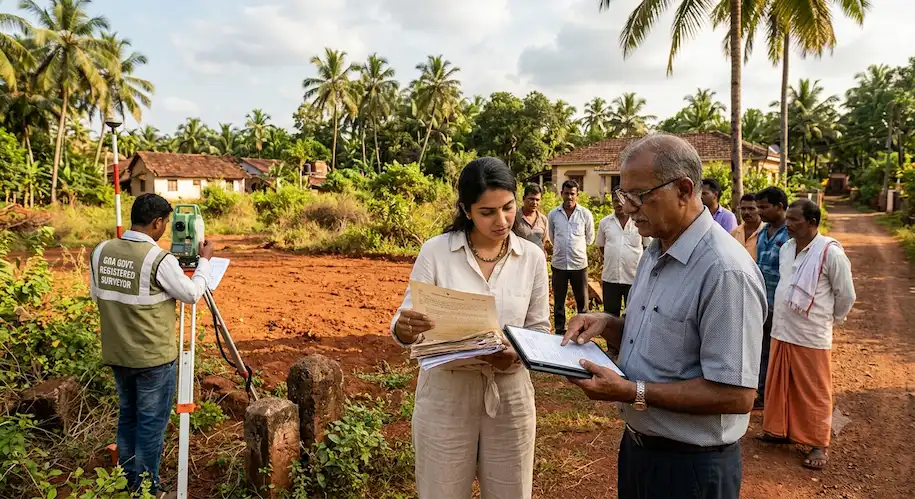
How to Verify a Goa Plot Before Buying: What to Investigate Before the Token Amount
ou’ve found a plot you like. The lane is quiet, the road is good and the price looks fair. The broker keeps saying, “Papers are clear, sir.” Then comes a line you’ve probably heard before: another buyer is coming tomorrow, so why not pay a small token today?
Hold on. A lot of Goa plot trouble starts with that first small payment.
This guide shows how to verify a Goa plot before buying. It follows the order a careful buyer would use, from the records you pull to the lines you put in writing. All of it happens before you pay a rupee.
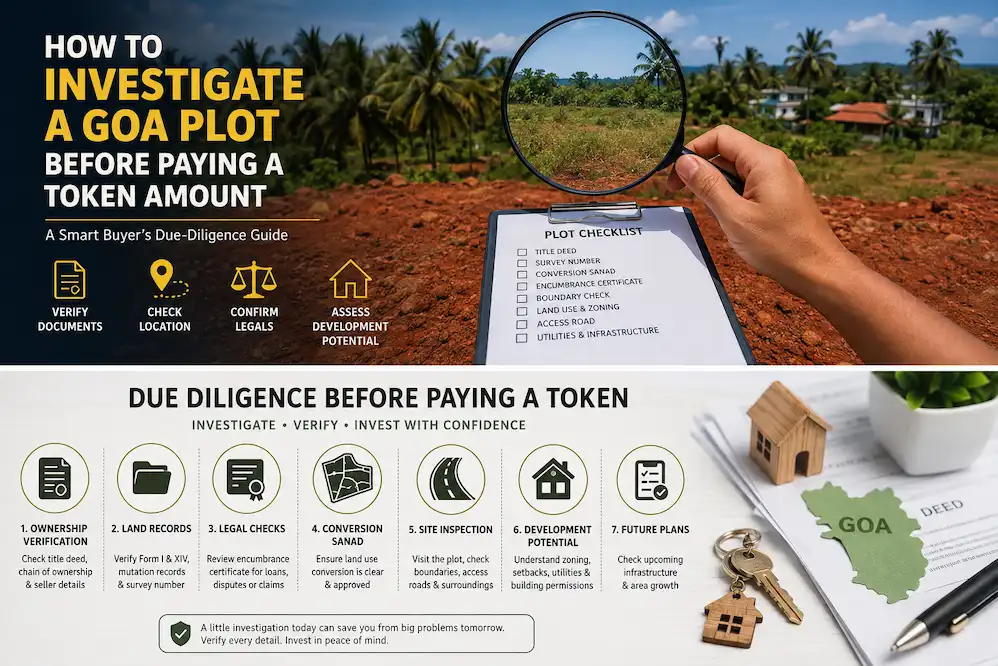
Here’s the short version. Think of it as a Goa plot due diligence checklist with eight stops. These are the documents to check before buying land in Goa: the Form I & XIV, an encumbrance certificate covering 30 years, the sale deed chain, the survey sketch and the TCP zoning certificate. Then check the conversion sanad, ask about tenants and comunidade rights, and get an advocate based in Goa to write a title opinion. Only after that should you talk about a token.
Why does the token amount matter so much?
The token amount before buying a plot in Goa looks small next to the full price, so people don’t think hard about it. But it changes the deal. Before it, you can walk away with a shrug. After it, every doubt costs you money, and you start talking yourself out of the doubt.
Sellers know this. Brokers know it even better. That’s why “someone else is coming tomorrow” is such a popular line. And whether you get that money back depends on what you signed, not on what somebody said on the phone.
Goa adds its own twists. Old Portuguese era records sit next to modern ones. Some land sits under a comunidade lease. Tenant names hide in a column most buyers never read. And a plot you can’t build on can look just like one you can.
How to verify a Goa plot before buying, step by step
Here’s your Goa plot due diligence checklist. Each step either clears the plot or stops you early, and stopping early saves money.
- Ask the seller for the survey number, subdivision number, village and taluka.
- Pull the Form I & XIV yourself.
- Check that the seller’s name has been mutated into the record.
- Order an encumbrance certificate for at least 30 years.
- Trace the sale deeds back through the chain.
- Match the survey sketch with the plot on the ground.
- Get the TCP zoning certificate and confirm the conversion sanad.
- Ask an advocate based in Goa for a written title opinion. Only then agree on a token amount.
Now let’s go through each one.
Documents to check before buying land in Goa
Never settle for photocopies from the seller or the broker. Pull the records yourself, or send your advocate. It costs very little, and it’s the only way to know the papers are real.
1. Form I & XIV
Goa’s record of rights lives in this form. The Directorate of Settlement and Land Records, or DSLR, keeps it under the Goa Land Revenue Code, 1968. Form I names the occupant or owner. Form XIV shows tenancy and cultivation.
Most buyers read the owner column and stop. Don’t. Read the tenant column too. If Form XIV carries a name that isn’t the seller’s, that’s your first question, and it needs an answer before any money moves.
You can view the record online on the DSLR portal. Keep the taluka, village, survey number and subdivision number handy. For legal use, ask for a certified copy through the Mamlatdar’s office or goaonline.gov.in.
2. Mutation entries
When a plot is sold, inherited or divided, the Mamlatdar updates the record. That update is called mutation. Say the seller bought the plot last year, but Form I still shows the old owner. Either the mutation is pending or it was never done. That doesn’t always mean you should walk away. It does mean you want an explanation in writing.
3. Sale deeds and the title chain
Ask for the seller’s registered sale deed and every deed before it. Banks and lawyers in Goa usually trace the chain back at least 30 years. Check that the survey number, area and names match in each deed. Gaps are common when land is held by families. Gaps are also where disputes begin.
4. Encumbrance certificate
The encumbrance certificate, or EC, comes from the Sub Registrar. It lists registered deals on the plot, like mortgages and sales, for the years you ask for. Ask for at least 30. You can apply on goaonline.gov.in or at the Sub Registrar’s office.
One catch. An EC shows only what was registered. It can miss unregistered deals, a pending court case or an indexing error. So read it with the original title deeds, not instead of them.
5. Survey sketch
Get the survey sketch from DSLR and compare its area with the sale deed. Then walk the boundary with the seller and a neighbour. If the deed says 600 square metres and the sketch says 540, ask why. Somebody’s wall may be in the wrong place.
Goa land title verification: what paperwork alone won’t tell you
Goa land title verification is more than collecting papers. Goa’s history throws up risks that no standard checklist covers.
1. Old records
Many Goan properties go back to Portuguese era deeds. Those may need a certified translation, and some titles need a search deeper than 30 years. If the seller got the land through an inventory proceeding after a death, ask for the court order. Then check that every heir signed or was represented.
2. Comunidade land
Some land is held under a comunidade lease called aforamento. Until it’s redeemed, you may be buying a lease right, not full ownership. Ask for the comunidade’s approval or proof of redemption. Banks get nervous about these plots. You should too.
3. Tenants and mundkars
A mundkar lives in a house on someone else’s land under Goa’s tenancy law. Those rights don’t disappear when the plot is sold. You take on the situation along with the land. Check Form XIV, then ask your advocate whether you need a Mamlatdar’s declaration or a registered settlement.
The site visit
Go more than once, and at different times of day. Look for:
- Huts, sheds or houses that aren’t in the papers
- A legal road or right of way to the plot
- A nullah, a water source or a paddy field next door
- Neighbours who dispute the boundary
Neighbours often know a plot’s history better than any document. Ask them. A cup of chai helps.
Can you actually build on it?
A clean title doesn’t mean you can build. Plenty of buyers get hurt right here.
The TCP zoning certificate comes from the Town and Country Planning Department. It tells you the zone under the Regional Plan, such as settlement, orchard, paddy or natural cover. Only settlement land is simple to build on. Coastal plots may face CRZ limits as well.
Then there’s the conversion sanad. Under Section 32 of the Goa Land Revenue Code, agricultural land can’t be used for anything other than agriculture without the Collector’s permission. That permission comes as a sanad. The sanad changes the land use. It doesn’t change the zone. You usually need both in order.
Be careful if a plot is sold as “zone changed.” In 2025 the High Court struck down rules framed under Section 17 subsection 2 of the TCP Act. Its replacement, Section 39A, has also been challenged in court. A zone change under either route can carry legal risk. Ask which section was used, get a copy of the order, and have your advocate confirm where it stands today.
Quick reference: documents to check before buying land in Goa
| Document | Where to get it | What it tells you |
|---|---|---|
| Form I & XIV | DSLR portal; Mamlatdar for certified copy | Owner, tenants, cultivation entries |
| Mutation record | Mamlatdar | Whether the sale was entered in the record |
| Encumbrance certificate | Sub Registrar / goaonline.gov.in | Registered mortgages and transactions |
| Sale deeds and title chain | Seller; Sub Registrar for certified copies | Who owned the plot, and how it passed on |
| Survey sketch | DSLR | Area, shape and boundaries |
| TCP zoning certificate | TCP Department | Zone and what can be built |
| Conversion sanad | Collector’s office | Permission for use other than agriculture |
Red flags that should slow you down
Pause your Goa plot due diligence checklist, or walk away, if you see any of these:
- The seller won’t let you pull the EC or Form I & XIV yourself
- You only get photocopies, with no original title deeds
- The seller’s name doesn’t match the record and nobody can say why
- A tenant or mundkar entry shows up in Form XIV
- The plot is sold as converted, but there’s no sanad or zoning certificate
- You’re asked for the token amount in cash, or before seeing any papers
- Pressure to decide within a day or two
A seller with a clean plot rarely minds being checked. If they get irritated, take note.
What should a token amount agreement say?
Once the checks look good, paying a token amount before buying a plot in Goa is perfectly normal. Just don’t hand it over on a handshake.
Ask your advocate to write down the exact plot: survey number, subdivision number, village and area. Add the total price, the token amount and when the balance is due. The agreement should say the deal depends on a good title opinion and clean zoning and sanad checks. It should also say the token is fully refundable if the title or zoning turns out to be defective. Add a date for signing the sale deed. And pay by bank transfer or cheque with a proper receipt, never cash.
Budget for stamp duty and registration charges too. Goa revised its stamp duty slabs in July 2026, so confirm the current rates with the Sub Registrar or your advocate. Older articles may quote numbers that are out of date.
Conclusion
A Goa plot can be a great buy or a long headache. Mostly, the difference is what you checked before you paid. So that’s how to verify a Goa plot before buying: pull the records yourself, trace the title, confirm zoning and sanad, talk to the neighbours, and get a written legal opinion before the token amount leaves your account.
Want a hand? The team at plotsingoa.in can shortlist plots that are already documented. We can also walk you through the documents to check before buying land in Goa and the Goa land title verification for any plot before you commit.
FAQs- How to Verify a Goa Plot Before Buying
Online views of Form I & XIV and survey details are quick. Certified copies, the EC and the zoning certificate can take days or a few weeks, and older records take longer. Plan on two to four weeks for a proper check.
You can pull the basic records, and you should. A title opinion is different. It needs an advocate based in Goa who understands comunidade, mundkar and zoning issues.
No. It’s the record of rights, but proper Goa land title verification means reading it together with the sale deeds, the EC and the mutation record.
Ideally, wait. If you must pay, keep it small, put it in writing and make it refundable if verification fails.