
A plot in Goa can look perfect on a site visit. Green surroundings, a quiet road, a seller who assures you everything is in order. Then the paperwork tells a different story: a tenant nobody mentioned, a survey number that doesn’t match the ground, or land marked as paddy on the zoning map. Problems like these are why a legal checklist for buying a plot in Goa matters more than the view or the price per square metre.
This guide walks through the checks in the order most property lawyers run them. It works whether you’re buying your first plot or your fifth, and whether you plan to build a home or hold the land as an investment.
Quick answer: To buy safely, confirm the seller’s ownership through the Form I and XIV extracts, run a full title search, check for tenants and mundkars, get the zoning certificate, confirm conversion status, review coastal restrictions, look for loans and court cases, and verify boundaries and road access on the ground. Only then should you sign an agreement or pay a meaningful amount.
How to buy land in Goa: the process in five steps
If you’re wondering how to buy land in Goa, the sequence is simpler than most people expect. The hard part is the verification, not the purchase itself.
- Shortlist plots and collect the survey number, village, and seller details.
- Verify the documents using the checklist below.
- Sign an agreement to sell, with a token amount, once you’re satisfied.
- Execute the sale deed and register it at the Sub-Registrar’s office, paying stamp duty and the registration fee.
- Apply for mutation so the land records show your name.
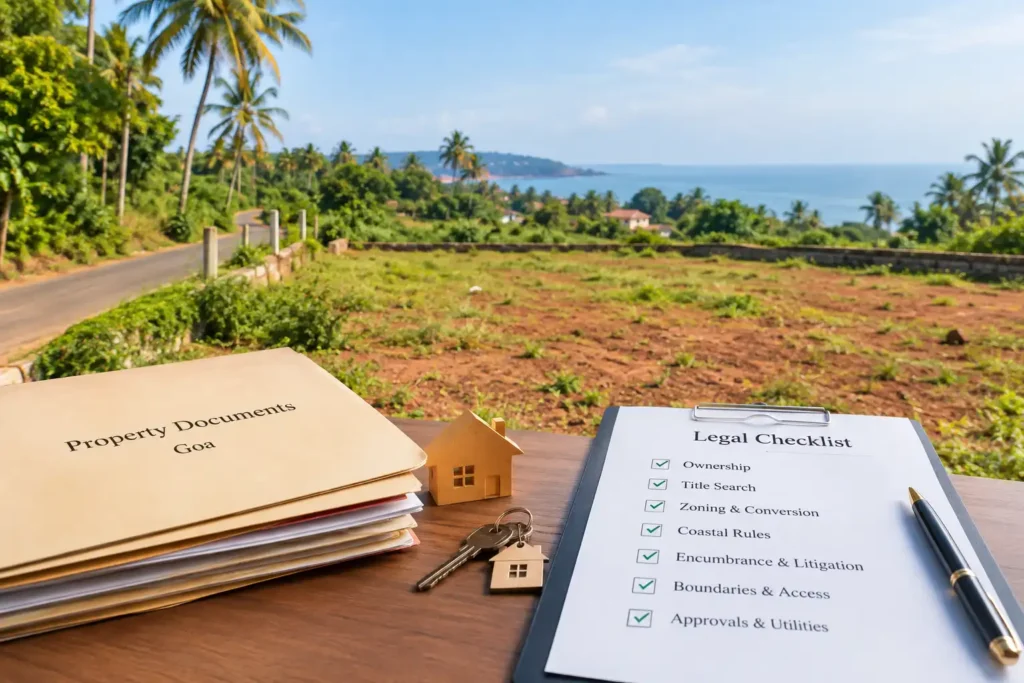
Buyers who ask how to buy land in Goa without delays often rush step three. Once money changes hands on a weak agreement, you’ve lost most of your bargaining power, so finish steps one and two first.
The legal checklist for buying a plot in Goa
Work through these nine checks in order. If any one of them fails, stop and get advice before going further.
1. Confirm who actually owns the land
Ask for the survey and sub-division number, then get the latest Form I and XIV from the Directorate of Settlement and Land Records (DSLR). Form I is the record of rights and shows the owners or occupants. Form XIV records tenancy and crop details. The name on Form I should match the person selling. If it doesn’t, ask why before you ask anything else.
2. Run a proper title search
Being listed as owner today doesn’t guarantee clean title. A lawyer should trace how the seller acquired the land and check every transfer along the way. The full process is explained in the Goa land title verification section further down.
3. Check for tenants and mundkars
Goa has a long history of tenancy and mundkar rights, where people live or farm on land they don’t own but are legally protected. A plot with an unresolved claim can’t be handed over empty, whatever the seller promises. Form XIV and a physical visit will usually show whether anyone else has a stake.
4. Get the zoning certificate
Request a zoning certificate from the Town and Country Planning (TCP) Department. It tells you how the land is classified under the applicable Regional Plan or Outline Development Plan. Settlement zones are generally buildable. Paddy fields, orchards and no-development zones come with restrictions. A plot that looks like a house site can be zoned for something else entirely.
5. Confirm conversion status
Land that was originally agricultural needs conversion before residential construction. Ask for the conversion sanad issued by the Collector under the Goa Land Revenue Code. If the seller says conversion is “in process”, treat the plot as unconverted, both for pricing and for your own building timeline.
6. Check coastal and eco-sensitive rules
Plots near the sea, rivers, creeks or khazan land can fall under Coastal Regulation Zone rules, and some areas are protected for ecological reasons. These rules can limit or block construction. Check the plot against the official coastal zone plan rather than relying on the seller’s description.
7. Look for loans, mortgages and court cases
Get an encumbrance certificate from the Sub-Registrar’s office and ask your lawyer to search for pending litigation. A mortgaged plot, or one caught in a dispute, can leave you paying for land you can’t use or sell.
8. Verify boundaries and access on the ground
Match the plot plan with what you actually see. Walk the boundaries, look for encroachments, and confirm the plot has a legal right of way to a public road, not just a path the neighbour tolerates. A landlocked plot is hard to build on and harder to resell.
9. Confirm layout approvals and utilities
If the plot sits inside a layout, check the approvals and whether the project is registered with Goa RERA. Ask about water and electricity connections, drainage, and who maintains the internal roads.
Goa land title verification: how it works
Title verification is where first-time buyers most often rely on trust when they should rely on documents. A sound Goa land title verification usually covers four things.
- The paper trail: collect the sale deeds, Form I and XIV, survey plan, earlier agreements and tax receipts.
- The chain of ownership: your lawyer follows each transfer back several decades and looks for gaps or unexplained changes.
- Goa-specific issues: under Goa’s civil code, property is often held jointly by spouses, so both may need to sign the sale. If the land came through inheritance, the inventory proceedings should be complete and every heir accounted for. It’s also worth confirming the land isn’t communidade property, which carries its own restrictions.
- Public notice: many lawyers publish a notice inviting objections, then wait to see whether any claims surface.
Ask for the lawyer’s opinion in writing. It becomes your record if a dispute appears years later.
Paperwork at signing and registration
Once every item on the legal checklist for buying a plot in Goa is clear, the agreement to sale should name the parties, the survey number, the price, the payment schedule and the date for the sale deed. Pay by bank transfer rather than cash, and keep every receipt.
The sale deed is then executed and registered at the Sub-Registrar’s office, where you’ll pay stamp duty and registration fees. Rates change, so confirm the current figures before you finalise your budget. If the sale value is above ₹50 lakh, you’ll generally need to deduct 1% TDS and deposit it with the tax department.
After registration, apply for mutation so the land records carry your name. Skipping this step is a common reason for headaches when you later try to sell, borrow against the land or start building.
Red flags that should make you walk away
- The seller won’t share original documents, or pushes you to pay a token amount quickly.
- The name on Form I doesn’t match the seller, and the explanation keeps changing.
- The price is far below nearby plots, with no clear reason.
- You’re offered a power of attorney instead of a registered title.
- Access to the plot depends on a neighbour’s goodwill.
- Zoning or conversion status is described verbally but never shown on paper.
Final thoughts
Buying land in Goa rewards patience. A legal checklist for buying a plot in Goa isn’t about suspecting every seller. It’s about knowing exactly what you’re paying for. Learn how to buy land in Goa step by step, insist on proper Goa land title verification, and bring in a local property lawyer before you pay anything significant.
This guide is general information, not legal advice, and rules can change, so confirm current requirements with the relevant departments. If you’re still choosing a plot, browse the listings on this website and ask our team about the ones that interest you.
FAQs: legal checklist for buying a plot in Goa
The Form I and XIV extracts, the sale deeds showing the chain of ownership, the zoning certificate, the conversion sanad where needed, an encumbrance certificate and the survey plan. Together they show who owns the land, what you can build and whether anything is claimed against it.
Get a zoning certificate from the TCP Department and confirm conversion status with the Collector’s records. Also check the plot against coastal and eco-sensitive zone rules, since those can restrict building even on land zoned for settlement.
It depends on how many transfers the land has seen and whether any disputes turn up. Simple cases can take a couple of weeks, while older or inherited land often takes longer.
A lawyer isn’t legally required to register a sale, but it’s strongly advisable. A local property lawyer understands Goa’s land records, tenancy and inheritance rules, and can spot problems a buyer would miss.
They are Goa’s land record extracts. Form I is the record of rights, showing owners and occupants. Form XIV records tenancy and crop details. Both are issued by the DSLR and are among the first documents to request.
Verify everything before you pay: ownership, title, zoning, conversion, tenants and access. Sign an agreement only after those checks clear, pay by bank transfer, register the sale deed at the Sub-Registrar’s office and apply for mutation afterwards.