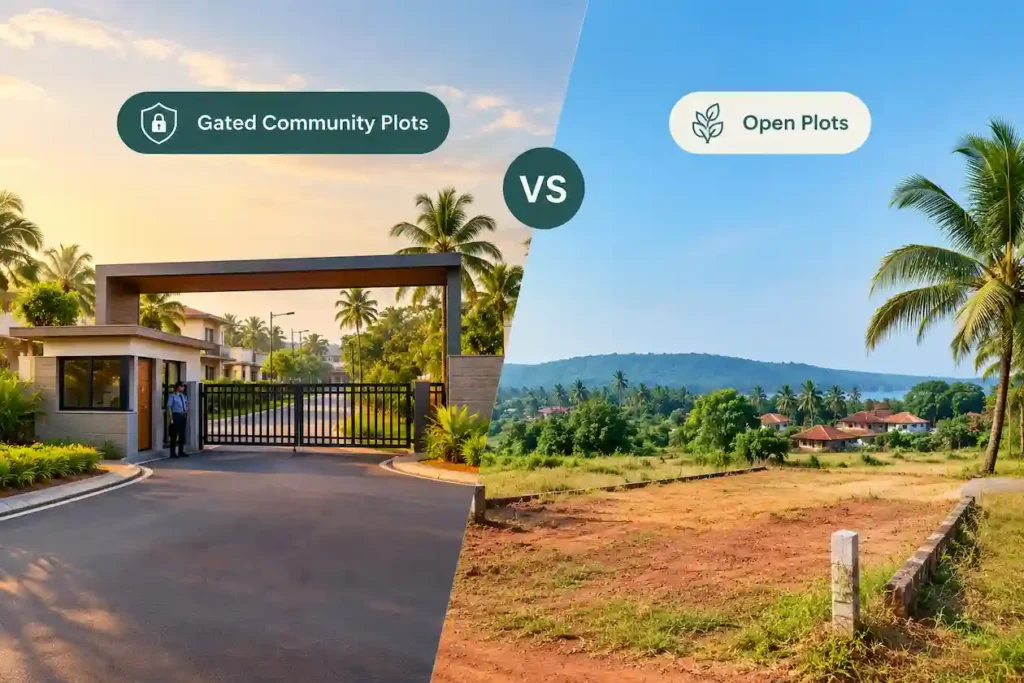
Picture two listings landing on your phone the same afternoon. The first is a plot inside a fenced layout, with a guard cabin at the gate and tarred roads running through. The second is a bare patch at the end of a village lane, a coconut tree on one side and a price that makes you look twice.
Which one wins? That’s the whole gated community vs open plot in Goa question, and it has no universal answer. A couple building a retirement home needs something very different from someone parking money for a few years.
So here’s an honest walk through the pros and cons of gated communities and standalone land.
The Short Answer
Gated layout if you want things ready, safe and properly documented, and you’ll pay a premium for that. Standalone land if you want the lower price and the freedom to build exactly what you imagine, and you’re okay doing the legwork. That’s the gist. Gated community plots in Goa usually suit families, NRIs and second home buyers. Open plots in Goa usually suit patient investors and people with a fixed idea of their dream house. Neither is automatically safer when buying a plot in Goa, because a messy title can sink either one.
What Are Gated Community Plots in Goa?
Gated community plots in Goa are plots inside a planned layout with controlled entry. By the time you see them, the developer has typically laid the roads, drains, water and power lines, street lights and a compound wall. Some add a clubhouse or a small pool. You buy the land, put up your own house, and share the cost of looking after the common areas through a residents association.
Layouts like these are common across North and South Goa, and it isn’t hard to see why. Not everyone wants to spend months chasing a power connection or haggling over a right of way with the neighbour. Buying a plot in Goa that’s already serviced skips most of that.
What Are Open Plots in Goa?
An open plot is simply land that sits outside any planned layout. No gate, no amenities, no association. Plenty of open plots in Goa are in villages, on slopes or inside older settlements, the kind of place where the lanes are narrow and the neighbours know your name. That’s the charm.
It’s also the catch. Access, water, power and drainage change from plot to plot, sometimes within a few hundred metres. One owner might get everything sorted in a month. Another might spend a year.
Pros and Cons of Gated Communities
Most buyers start here, so let’s look at the pros and cons of gated communities first.
1.What you gain
Security is the first thing people mention, and for good reason. A guard at the gate and a few cameras matter a lot when you’re away for months, which is common for second home owners. Construction can also start sooner because the basics are already in. Larger plotted projects generally need Goa RERA registration, so there’s a public record you can check before paying anything. Resale is usually smoother too, since end users and tenants like a secure address that looks cared for. And you get neighbours from day one, which helps if you’re new to the state.
2.What you give up
Money, mostly. The price per square metre is higher because you’re paying for the roads, the wall and the gate. Maintenance charges keep coming for as long as you own the plot. Some layouts also dictate building height, setbacks and even the look of your elevation, which gets frustrating if you have strong ideas. Privacy is thinner than on your own land. And the layout might not be in the village you had your heart set on.
Pros and Cons of Open Plots in Goa
Now the other camp.
1.Why people choose them
The price is the hook. Open plots in Goa usually cost less per square metre than comparable plots in a developed layout. You also design the house the way you like, within local planning rules, and nobody sends you a bill for common area upkeep. Location is the other big draw. You can pick a lane, a slope or a view that no developer would have fenced off. And if the area develops, the land can gain value, though anyone who promises that is selling something.
2.Where they bite
You might have to bring in water, power and drainage yourself, and sort out road access too. Security is your problem as well, so budget for a fence, a caretaker or cameras, especially if you won’t visit often. With no developer’s approvals behind you, every check on title, boundaries and zoning lands on your desk. And resale can drag in remote spots, because buyers get nervous when access is unclear or services are missing.
Gated Community vs Open Plot in Goa: Side by Side
Short on time? Here’s the gated community vs open plot in Goa comparison in one table.
| Factor | Gated community plot | Open plot |
|---|---|---|
| Price per sq m | Higher | Generally lower |
| Security | Controlled entry, shared | Your responsibility |
| Infrastructure | Usually in place | Varies, may need arranging |
| Maintenance fees | Yes, ongoing | None |
| Design freedom | Limited by community rules | Wide, within planning norms |
| Paperwork | Usually organised, RERA for larger projects | You verify everything |
| Resale appeal | Strong with end users | Depends on location and access |
| Best suited to | Families, NRIs, second home owners | Long term investors, custom builders |
The Costs Nobody Puts on the Brochure
The listed price is just where the negotiation starts. With gated community plots in Goa, ask what the maintenance charges are, whether there’s a corpus or sinking fund contribution, and if development charges are already inside the quoted rate. Get it in writing.
With open plots in Goa, the extras show up after you’ve paid: a boundary wall, a borewell or water connection, an electricity connection, some road work, a caretaker, legal fees for the title check. None of them is scary alone. Together, they can eat most of the price gap you thought you’d saved.
Resale and Long Term Value
Resale is one of the pros and cons of gated communities that people forget to weigh. Gated layouts usually sell faster, because end users like a ready address with services in place.
Open plots are a different game. A well documented plot with proper road access in a growing village can do very well. A plot with disputed boundaries or no legal access can sit unsold for years, and that’s the real danger of buying a plot in Goa without proper checks. No plot type promises appreciation, so treat guaranteed returns as a red flag.
Goa Specific Checks You Shouldn’t Skip
Goa plays by its own land rules, and they matter more than any gate. Before you pay a token amount, whether it’s for open plots in Goa or a gated layout, run through these. Buying a plot in Goa without them is a gamble.
Zoning first. Settlement zone land is treated very differently from orchard or agricultural land, and some zones cap how much of the plot you can build on. Agricultural land generally needs a conversion sanad before construction, though whether a fresh one is needed depends on the zone and the records, so ask a lawyer. Then pull the Form I and XIV. They show who owns the land and whether any tenant or cultivator is listed, and mismatches are behind a lot of disputes.
Near the coast, Coastal Regulation Zone rules may kick in. Goa also follows its own civil code, so heirs and spouses can have a claim on family property, which means every joint owner must be part of the sale. NRIs and OCI cardholders can buy residential and commercial property, but not agricultural land, plantation property or farmhouses, so check the classification early.
Rules change. Have a Goa based property lawyer confirm what applies to your plot.
Which One Fits You?
Building soon for your family? Go gated. You’ll save time and get services from day one.
Holiday home, or buying as an NRI? Gated community plots in Goa make sense if you won’t be around much, as long as the land is residential.
Investing for the long haul? Open plots in Goa’s developing areas can work, but only after solid zoning and title checks, and only if you can wait.
Dreaming of a one of a kind house? Take an open plot. Or pick a layout, but read its design rules first.
A Quick Checklist Before Buying a Plot in Goa
- Visit at different times of day, and again after rain. The monsoon exposes drainage problems fast.
- Confirm the zoning, and that construction is allowed.
- Compare the owner and tenant entries on the Form I and XIV.
- For layouts, check the RERA registration and the approved plan.
- Get every cost in writing: maintenance, transfer, development, connections.
- Make sure the road access is legal, not just a track across someone else’s land.
- Let a Goa based lawyer read the title documents before you sign or hand over a token amount.
Final Thoughts
There’s no trophy for the better option here. The gated community vs open plot in Goa choice is about what suits you. If you want security, services and a quicker route to building, gated community plots in Goa earn their higher price. If you want freedom and a lower starting cost, and you don’t mind the checking, open plots in Goa can pay off.
Either way, the paperwork matters more than the packaging. If you’re buying a plot in Goa and want a second opinion, talk it through with the team at The Whitelisted Estates before you commit.
Frequently Asked Questions
Start with what you plan to do with the land. Gated community plots in Goa win on security, ready services and easier resale. Open plots win on cost and design freedom. Then compare the total cost and paperwork for the actual plots on your shortlist.
They can be, especially in areas that are still developing, but returns are never guaranteed. Your title, zoning and access matter more than the label open plot.
They vary by project and by what the community provides. Weigh them as part of the pros and cons of gated communities, and ask for a written breakdown of what each charge covers before you commit.
Residential plots, yes, subject to the usual rules. Agricultural land, plantation property and farmhouses, no. Confirm the land’s classification first.