Most people picture the same thing when they dream of a home in Goa: a quiet lane, a few mango trees and a balcão to watch the monsoon from. It’s a lovely picture, and it’s exactly why so many buyers rush in. Buying land in Goa looks easy on a Sunday drive and gets complicated the moment someone asks to see the papers.
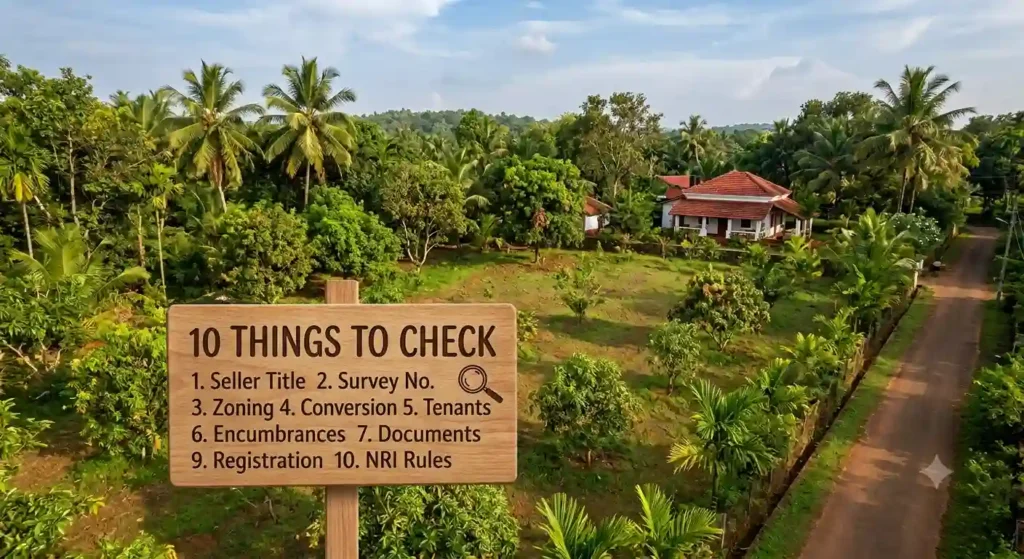
Goa runs on a land system shaped by Portuguese-era records, village-owned property and tenant protections you won’t find in most other states. Whether you’re scrolling through land for sale in Goa or already standing on a plot with a broker, these ten checks will help you tell a sound purchase from an expensive mistake. If you live abroad, there’s a section on whether NRIs can buy land in Goa too.
Why Buying Land in Goa Is Different
In a typical Indian city, you check the sale deed, pay up and register. In Goa, you also need to ask who else has a claim on the land, what the zoning allows, and whether anyone lives on it with legal protection.
Many plots have been in one family for generations, split informally among cousins and never formally partitioned. Records sometimes lag behind what’s on the ground. None of this is a reason to walk away. It’s a reason to slow down and verify before any money changes hands.
1. Confirm Who Actually Owns the Plot
The first rule of buying land in Goa is simple: don’t trust the person in front of you until the paperwork says they can sell.
Ask for the chain of title going back at least 30 years, including past sale deeds, inheritance records and partition deeds. If the land is held jointly, every co-owner has to be part of the sale or give written consent. One missing heir can reopen the whole deal years later. Goa’s rules on inheritance and marital property are also unusual, so a spouse’s or heir’s consent may matter more than you’d expect.
Pay a local property lawyer for a proper title search and a written opinion. A verbal “everything is fine” isn’t worth much.
2. Read Form I & XIV Line by Line
Form I & XIV is the record of rights for rural land in Goa, and it tops the list of documents required to buy land in Goa. It shows the survey and sub-division number, the land’s classification, the area, the owner’s name and any tenants or occupants.
Check that the survey number in the sale papers matches the one in the record, and that the area on paper roughly matches the plot you’re seeing. Look closely at the occupants column. A name there that isn’t the seller’s deserves an explanation. You can view the record on the Directorate of Settlement and Land Records website and order a digitally signed copy through Goa Online. Always pull a fresh copy yourself instead of accepting the seller’s old photocopy.
Many listings of land for sale in Goa quote a survey number upfront. Use it to look up the record before you even visit.
3. Check the Zoning Before You Fall in Love
Not every plot can take a house. Goa’s Regional Plan places land into zones such as settlement, orchard, agricultural, paddy field and no-development areas, and the Town and Country Planning Department keeps these records.
Buying land in Goa without checking its zone is the mistake that hurts most. A gorgeous orchard plot might allow little or no construction, and a glossy advertisement for land for sale in Goa will rarely mention that. Request a zoning certificate and ask what floor area ratio applies, because that decides how much house you can actually build.
4. Find Out the Conversion Status
Agricultural land can’t simply become a villa site. It needs a conversion sanad from the Collector, issued under the Goa Land Revenue Code, before you build on it.
Some plots already have the sanad, and it should be in the seller’s file. If not, find out whether conversion is realistic for that zone, how long it takes and who pays. Treat “conversion is easy” as a sales line, not a fact. If the deal depends on it, make it a written condition in the agreement.
5. Look for Comunidade and Mundkar Issues
Goa has legal wrinkles that surprise outsiders. Comunidade land is village-level community property with its own rules, and it generally can’t be traded like ordinary freehold. If any part of a plot has a comunidade link, get specialist advice before going further.
Then there are mundkars: traditional occupants who live in a house on someone else’s land and are protected from eviction under Goan law. If a plot comes with a mundkar’s home, you may be buying a permanent neighbour. Form XIV often flags these cases, but a site visit and a chat with the neighbours will tell you more than any form. It’s a detail that catches out many first-time buyers of land in Goa.
6. Get Your Own Encumbrance Certificate
An encumbrance certificate shows whether a property has been mortgaged, attached against a loan or caught up in a dispute. You can get it from the Sub-Registrar’s office for the period you need.
Even if the seller swears the land is clean, request the certificate yourself. It’s also worth asking your lawyer to check court records for any case involving the seller or the property. An unpaid loan or a pending case can leave you holding a legal problem instead of a home.
7. Collect the Documents Required to Buy Land in Goa
Knowing the documents required to buy land in Goa makes the process smoother and helps you spot gaps in a seller’s file. Here’s a working checklist:
- The latest sale deed and earlier title deeds
- Form I & XIV and the survey plan
- Encumbrance certificate
- Conversion sanad, if the land was agricultural
- Zoning or land-use certificate
- Property tax receipts and no-dues certificates
- ID and address proof of every party
- Approved layout plans, if the plot is part of a development
Tick items off as they arrive. If a seller keeps delaying basic papers, take that as information. Keep certified copies and originals organised, because you’ll need them again for the Goa land registration process.
8. Walk the Land More Than Once
Perfect paperwork won’t fix a bad plot. Before buying land in Goa, visit at different times of day and, if you can, in different seasons. A dry field in December can turn into a pond in July.
Check these on every visit:
- Access. Is there a legal right of way, or does reaching the plot depend on a neighbour’s goodwill?
- Slope and drainage. Steep land can limit building, and low-lying land may flood.
- Utilities. How far are the nearest water and power connections, and what will it cost to bring them in?
- Coastal rules. Plots near the sea or a river may fall under Coastal Regulation Zone restrictions.
A licensed surveyor can mark the boundaries so there’s no dispute with neighbours later.
9. Understand the Goa Land Registration Process
Due diligence ends with registration. The Goa land registration process works broadly like this:
- Your lawyer drafts the sale deed on the correct stamp paper.
- You pay stamp duty and registration charges, which depend on the property value and get revised from time to time. Confirm the current rates with the Sub-Registrar’s office before you budget.
- The buyer, seller and witnesses appear before the Sub-Registrar with original documents and ID, and the deed is registered.
- You apply for mutation so the land records and property tax records show your name.
Plenty of buyers stop at step three. Don’t. Until mutation is done, the records don’t fully reflect your ownership, and that causes trouble when you apply for building permissions or try to sell later.
10. Can NRIs Buy Land in Goa?
A lot of people looking for a Goan home live overseas, so this question comes up constantly. So, can NRIs buy land in Goa? Yes, with limits. Under India’s foreign exchange rules, NRIs and OCI cardholders can buy residential and commercial property without prior RBI approval, but that general permission doesn’t extend to agricultural land, plantation property or farmhouses.
That’s why the zoning and conversion checks matter even more for overseas buyers. A plot still classified as agricultural is a problem no matter how good it looks in photos.
Payment has to come through proper banking channels, usually an NRE or NRO account. For NRIs buying land in Goa from abroad, a power of attorney can stand in for you at registration, but use a lawyer you trust and keep the powers narrow. Rules change, so confirm the latest position with your bank or lawyer before you commit.
Budget for More Than the Price
Buying land in Goa costs more than the number on the sale agreement. Stamp duty, registration charges, legal fees, survey costs, conversion charges and construction approvals all add up. When you compare land for sale in Goa, compare the full cost, not just the asking price.
Put every promise in writing, whether it’s conversion, vacant possession or removal of an occupant, and attach timelines. Keep payments small, a modest token against a written agreement, until your lawyer finishes the checks. And be wary of “decide today, another buyer is waiting.” A genuine plot will survive a week of verification and later construction approvals all add up, and they can change the real cost of the land considerably.
Conclusion
Buying land in Goa rewards patience. Verify the title, read Form I & XIV, confirm the zone, gather the documents required to buy land in Goa and take the Goa land registration process seriously, mutation included. If you’re overseas, build the rules into your search from the start, because whether NRIs can buy land in Goa depends on how the specific plot is classified.
Do the homework before the handshake, and the land will give you what you imagined: a place to slow down, with no legal worries attached.
Frequently Asked Questions
It is possible but risky. Local land laws, comunidade rules and tenant rights are specialised enough that a local lawyer’s fee is usually a small price for peace of mind.
Falling for the location and skipping the zoning check. Beautiful land that cannot legally be built on is just an expensive view.
Yes. Stamp duty and registration charges are paid at the time of registration, and both are calculated on the property value. Rates are revised from time to time, so confirm the current figure with the sub-registrar’s office or your lawyer before finalising your budget.
Yes, many banks offer plot loans, but the terms are stricter than home loans. Lenders usually want a clear title, a verified zoning certificate and a clean encumbrance record before approving. Agricultural land is harder to finance, so a converted plot with a valid sanad makes approval much easier.
A clean deal can close in a few weeks, but thorough title searches, conversion or mutation can stretch it to several months.